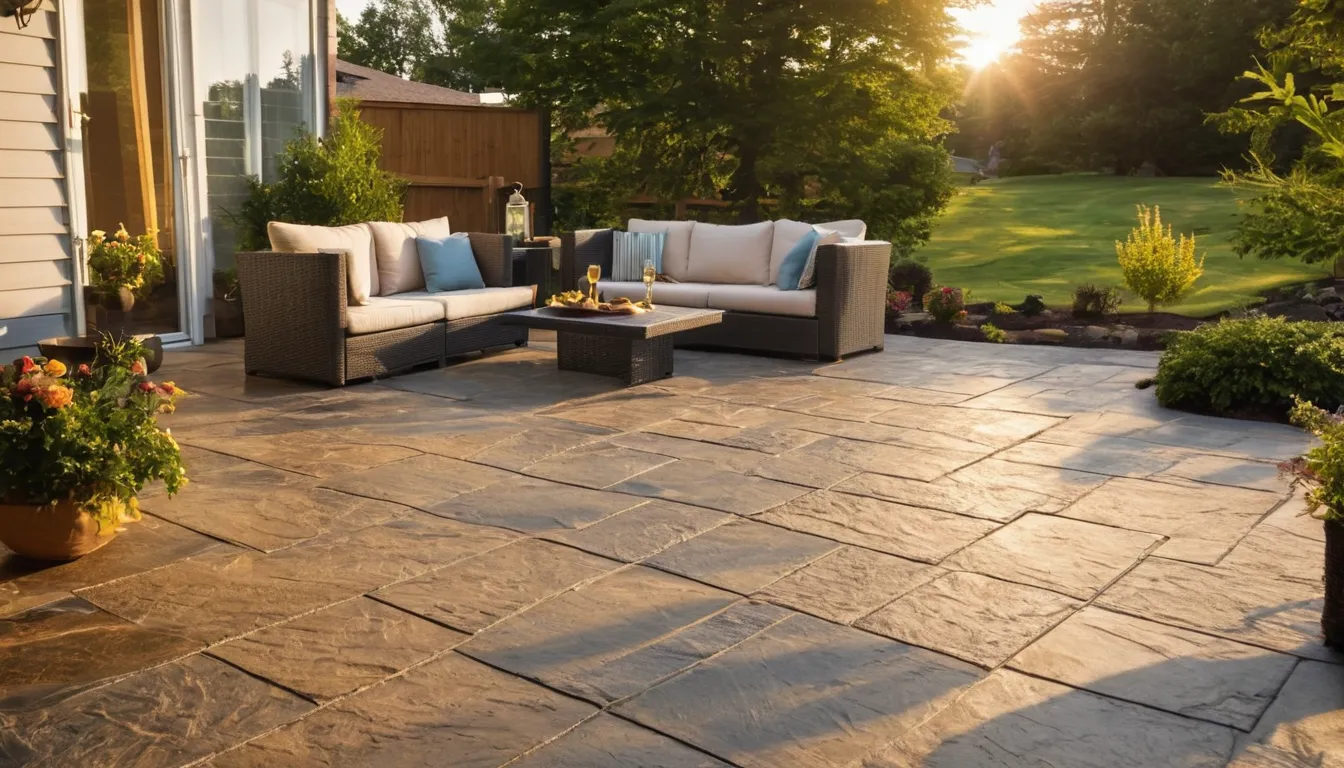
Need residential concrete driveways in Aurora?
Planning a new driveway or patio? Send a request for an estimate and a local provider in our network can follow up with you.
No obligationRequest an estimate for your driveway
A driveway rarely fails overnight. It sends small signals first: hairline cracks, a slab that dips, a patch of flaking surface. If you catch them early, you can choose between a patch and a full replacement on your own schedule.
Cousinproud Concrete is a referral service. We do not pour concrete. We connect homeowners in Aurora and the Aurora area with independent providers in our network who handle new driveways. This page shows what to check, what you can safely do yourself, and when it makes sense to stop and request an estimate.
Walk your driveway slowly. Look at every joint, every corner and every low spot. Small problems show up here long before the whole slab gives out.
With cold winters, deep frost and wet springs, concrete in the Aurora area works hard. Water gets in, freezes, expands and pushes. That cycle is behind most early damage.
Hairline cracks are common and often harmless. Measure the wider ones. A crack you can slide a coin into needs attention. So does one where the two sides sit at different heights.
Cracks that branch like a spider web point to a weak base underneath. Patching the top will not fix that.
Place a long level or a straight board across the slab. If it rocks or leaves a gap, the ground below has moved. Frost heave, washed-out soil and spring flooding are the usual causes.
A slab that tilts toward the house is a bigger worry. Water then runs toward the foundation instead of away from it.
Run your hand over the surface. Does it shed grit or peel in thin layers? That is scaling. It often comes from winter de-icing products and water trapped in the top layer.
A little scaling can be sealed and watched. Widespread scaling usually means the surface is wearing out.
Concrete driveway repair makes sense when damage is small and the base is sound. A few narrow cracks or one chipped corner can often be filled and sealed.
Replacement is the better path when cracks are wide and many, slabs have sunk, or the surface is breaking down across most of the drive. Paying for repeated patches can add up to more than one new pour.
You do not need special tools. Grab a tape measure, a level, a garden hose and a notepad.
These notes help a provider give you a clearer quote.
You can clean, rinse and seal a sound surface. You can fill a narrow crack with a flexible filler made for concrete.
Stop there. Sunken slabs, wide gaps and heavy flatwork damage need a pro. If cracks also show up in your foundation walls or basement, talk to foundation repair experts as well. A driveway that drains toward the house can be part of that problem.
A typical job starts with removing the old slab and checking the ground below. The provider shapes and compacts the base, sets forms, and places reinforcement. Then comes the pour, the finish, and cut or tooled joints.
Good concrete flatwork depends on that hidden base work. Ask how the provider handles it.
Measure the width you really use. Many families want room for two cars plus a walking strip. Think about turning space and where guests park.
Typical residential driveways are about four inches thick. Heavier vehicles may call for more. A broom finish gives grip in wet and icy weather. Smooth finishes look sleek but get slick.
The apron is the part of the driveway where it meets the street or sidewalk. Many towns control its width, slope and thickness. Some require a permit for the whole project.
Ask the provider who handles permits, and check with your local building office before you start. Plan the slab with the rules in hand.
Concrete needs mild temperatures to cure well. Hot, humid days can make it set too quickly. Cold snaps can ruin a fresh pour. Storms and hail can pit a wet surface.
Providers in our network can explain what season fits your project. Many can respond quickly to requests, but availability varies.
Get more than one written quote. Compare thickness, base work, reinforcement, joint plans and cleanup. Ask what happens to the old concrete.
A clear quote lists each item. Be wary of vague totals. Ask about drainage, since water control matters as much as the slab.
Keep cars and foot traffic off until the provider says it is ready. Keep pets and kids away too. Water the surface lightly if the provider advises curing care.
Leave de-icing products alone for the first winter. Use sand for grip instead.
Seal the surface when the provider recommends it. Rinse off salt and oil. Clear gutters and downspouts so water runs away from the slab and your foundation.
Check the joints each spring. Early action on a small crack is cheaper than a big job later.
The provider breaks up and hauls away the old driveway so the new one starts clean.
Soil is shaped and compacted so water drains away and the slab sits level.
Forms set the shape. Rebar or mesh helps hold the slab together over time.
Concrete is placed, finished for grip, and cut so cracks follow planned lines.
These are typical U.S. ranges. Your price depends on size, soil, access and local rules. Always get a written quote before work starts.
| Item | Typical range | Notes |
|---|---|---|
| New concrete driveway, per sq ft | $6 – $15 | Higher for thicker or decorative work |
| Average two-car driveway | $3,500 – $9,000 | Size and finish change the total |
| Old slab removal and disposal | $1 – $3 per sq ft | Depends on thickness and hauling |
| Base prep and grading | $500 – $2,500 | Soft or sloped ground costs more |
| Street apron and permit | $200 – $1,500 | Rules vary by town |
| Sealing after curing | $0.50 – $2 per sq ft | Often repeated every few years |
Measure cracks, find low spots, and take dated photos so the damage is easy to describe.
Fill in the short form with your address, driveway size and notes. It takes a few minutes.
A local provider reviews your details, may visit, and explains the plan and price.
Read each written quote closely, ask questions, and choose the provider that fits your plan.
Catching cracks and sinking early gives you time to compare quotes instead of rushing a choice.
Providers in our network know frost depth, spring flooding and local permit habits.
We explain what to check and what to ask, so you can talk to providers with confidence.
Requesting an estimate does not commit you to hiring anyone from our network.
Planning a new driveway or patio? Send a request for an estimate and a local provider in our network can follow up with you.
No obligationLook at the pattern. A few narrow cracks usually suit repair. Wide cracks, sunken slabs and widespread surface flaking point toward replacement. A local provider can inspect the base and give you a written opinion.
Walking is often possible after a day or two, but cars usually need about a week. Full strength takes around four weeks. Your provider will give exact timing based on the mix and the weather.
Small paths are doable for a handy homeowner, but a full driveway is hard. Base work, timing, finishing and permits all matter. Most people save their weekend effort for cleaning and sealing, and hire a provider for the pour.
Planning a new driveway or patio? Send a request for an estimate and a local provider in our network can follow up with you.
No obligation