Need concrete patios help in Aurora?
Planning a new driveway or patio? Send a request for an estimate and a local provider in our network can follow up with you.
No obligationRequest an estimate for your patio
A new patio is a big project, and the choices you make before the pour matter most. This page walks you through the basics: how to check your yard, how big to go, which finish to pick, and how water and frost affect flatwork.
Cousinproud Concrete is a referral service. We connect homeowners in the Aurora area with independent providers in our network, and those providers do the work. Use this page to learn what to look at first, know where DIY ends, and ask better questions when you request an estimate.
A patio looks simple. It is a flat slab with a grill and a few chairs. But the parts you cannot see decide how long it lasts. This page helps you plan the slab, catch trouble early, and know when to talk to a local provider in our network. Providers do the pouring. Cousinproud Concrete helps you get ready.
Walk the spot you have in mind right after a hard rain. Look for puddles. Watch where the water runs. Push a screwdriver into the soil. If it sinks easily, the ground is soft and may need a deeper gravel base.
Then look at the house wall. Hairline cracks in the foundation, damp basement walls, or a sump pump that runs often are early warnings. Those are jobs for foundation repair experts, and they should come before any new slab goes against the house.
Spot these now, while they are small:
Fix the water problem first. A new slab poured over a wet problem only hides it.
Concrete is tough and easy to sweep. It holds grills, heavy tables, and kids on bikes. Our region has cold winters, deep frost, hot humid summers, and hard storms. Well-built concrete flatwork can handle all of that when the base, joints, and slope are done right.
Most projects follow the same path:
You can paint the outline, set string lines, and clear the grass. You can measure twice and take photos of the yard. Pouring is different. Concrete sets on its own clock, and mistakes are hard to undo. Mixing, placing, and finishing a large slab belongs to a provider.
Set your table and chairs on the lawn. Leave room to pull a chair back and walk behind it. Many patios land somewhere between 10 by 12 and 16 by 20 feet. Multiply length by width to get square feet, then ask each provider to quote that same number.
Most patios use about four inches of concrete over packed gravel. A hot tub or heavy outdoor kitchen may need more. Ask the provider to explain what they plan and why.
A broom finish gives grip and a clean look. Exposed aggregate shows small stones in the surface. Color can be mixed in or added later.
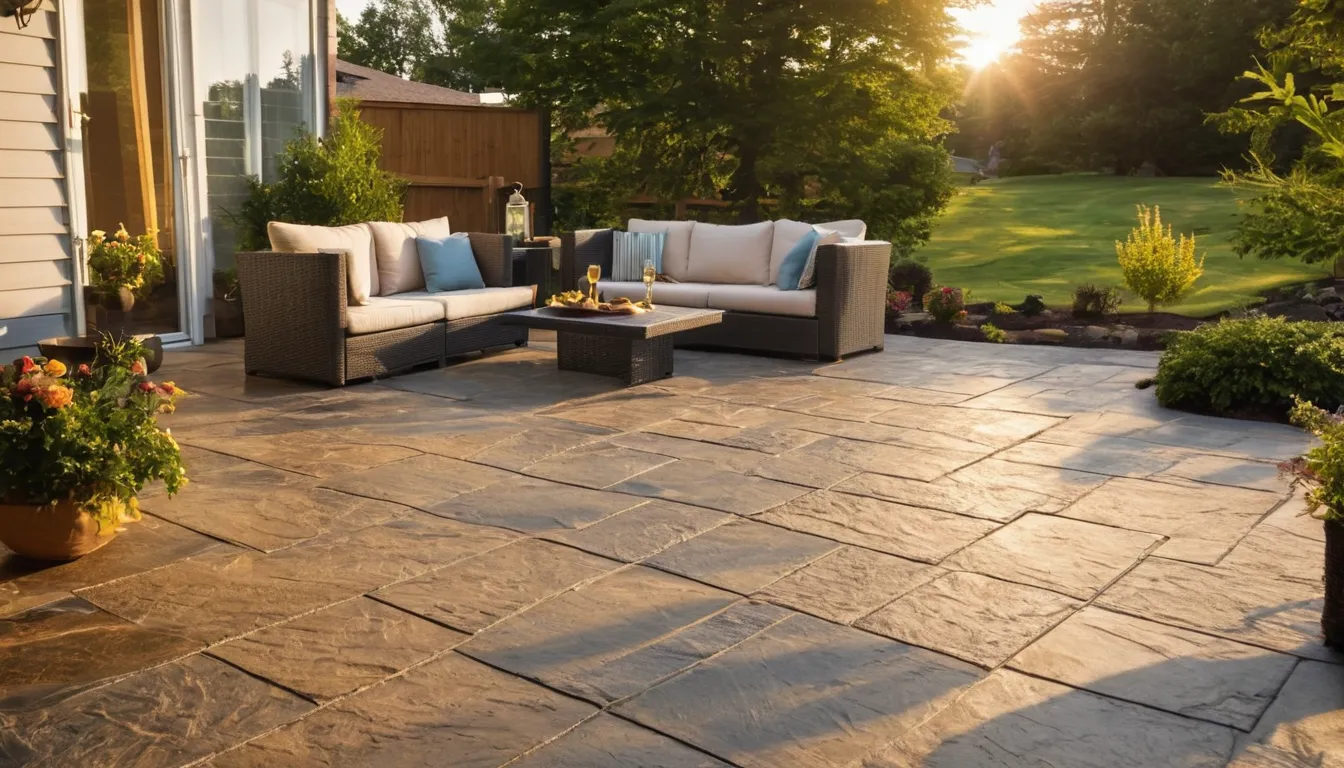
Stamped concrete patios press patterns into fresh concrete to look like stone, brick, or wood. They take skill and timing, and they need the right sealer. Ask to see past work before you choose a pattern.
A glossy sealer looks nice but can get slick when wet. Ask about a non-slip additive, especially near a pool, steps, or a shady corner.
A patio should slope away from the house. About a quarter inch per foot is common. Ask each provider how they plan to move water. Spring flooding and storm runoff can push water toward a basement, so extend downspouts and keep soil from piling over the slab edge.
Get two or three written quotes. Make sure each one lists:
Ask to see proof of any license or insurance your area requires. Providers in our network are independent, so check these details yourself.
Concrete likes mild days. A pour in hard frost or on a scorching afternoon can lead to cracks or a weak surface. Ask how the provider covers and protects fresh concrete if a storm rolls in.
Keep feet, pets, and furniture off until the provider says it is safe. Rinse dust and dirt gently. Hold off on heavy loads for as long as they advise.
Sweep often and rinse with a hose. Reseal on the schedule your provider suggests. Skip de-icing salts the first winter. Use a plastic shovel on snow.
Hairline cracks along joints are common. Photograph them and check again in a month. If a crack widens, the surface flakes, or one side sinks, talk to a provider early.
Tell us about your yard and your plans, and we will point you to providers in our network.
Prefer to talk it through? Request a callback to check provider availability.
Providers look at slope, soil, and nearby walls before quoting, so you know what the ground needs.
Gravel gets packed and forms get set so the slab sits level and drains properly.
Concrete is placed, smoothed, and textured, then joints are cut to control cracking.
The slab cures with care, and a sealer protects it once it is ready.
Prices vary by region, soil, access, and design. These are typical U.S. ranges only. Always ask for a written quote that lists square feet, thickness, base, finish, and sealer.
| Item | Typical range | Notes |
|---|---|---|
| Basic broom-finish patio | $6 – $12 per sq ft | Plain gray slab on a gravel base |
| Stamped or colored patio | $12 – $22 per sq ft | Pattern, color, and sealer add cost |
| Old slab removal | $2 – $6 per sq ft | Thickness and rebar change the price |
| Grading and gravel base | $1 – $4 per sq ft | Soft or sloped ground costs more |
| Drainage fixes | $500 – $3,500 | Downspout lines, regrading, or drains |
| Sealer | $1 – $3 per sq ft | Resealing is needed every few years |
Look at drainage, soil, and the house wall. Note puddles, damp spots, and any foundation cracks.
Lay out furniture, measure square feet, and decide on a finish that fits your home.
Tell us about your project and we will connect you with a local provider.
Review base, thickness, finish, and sealer in each quote before you choose.
We explain the steps in simple words so you know what to ask.
You are connected with independent providers in our network who know regional frost and storms.
We say where DIY ends, so you do not take on a pour that needs a pro.
Request an estimate, compare your options, and decide on your own schedule with no pressure.
Planning a new driveway or patio? Send a request for an estimate and a local provider in our network can follow up with you.
No obligationMost home patios use about four inches of concrete over a packed gravel base. Heavier loads, like a hot tub, may need more. Ask each provider to explain the thickness and base they plan to use.
Light foot traffic is often fine after a day or two, but furniture and heavy loads need longer. Follow the provider's advice, since weather and mix can change the timing.
A small pad is possible for a handy homeowner, but base prep, forms, and finishing take skill. For larger patios or sloped yards, it is wise to get a provider's estimate first.
Planning a new driveway or patio? Send a request for an estimate and a local provider in our network can follow up with you.
No obligation